
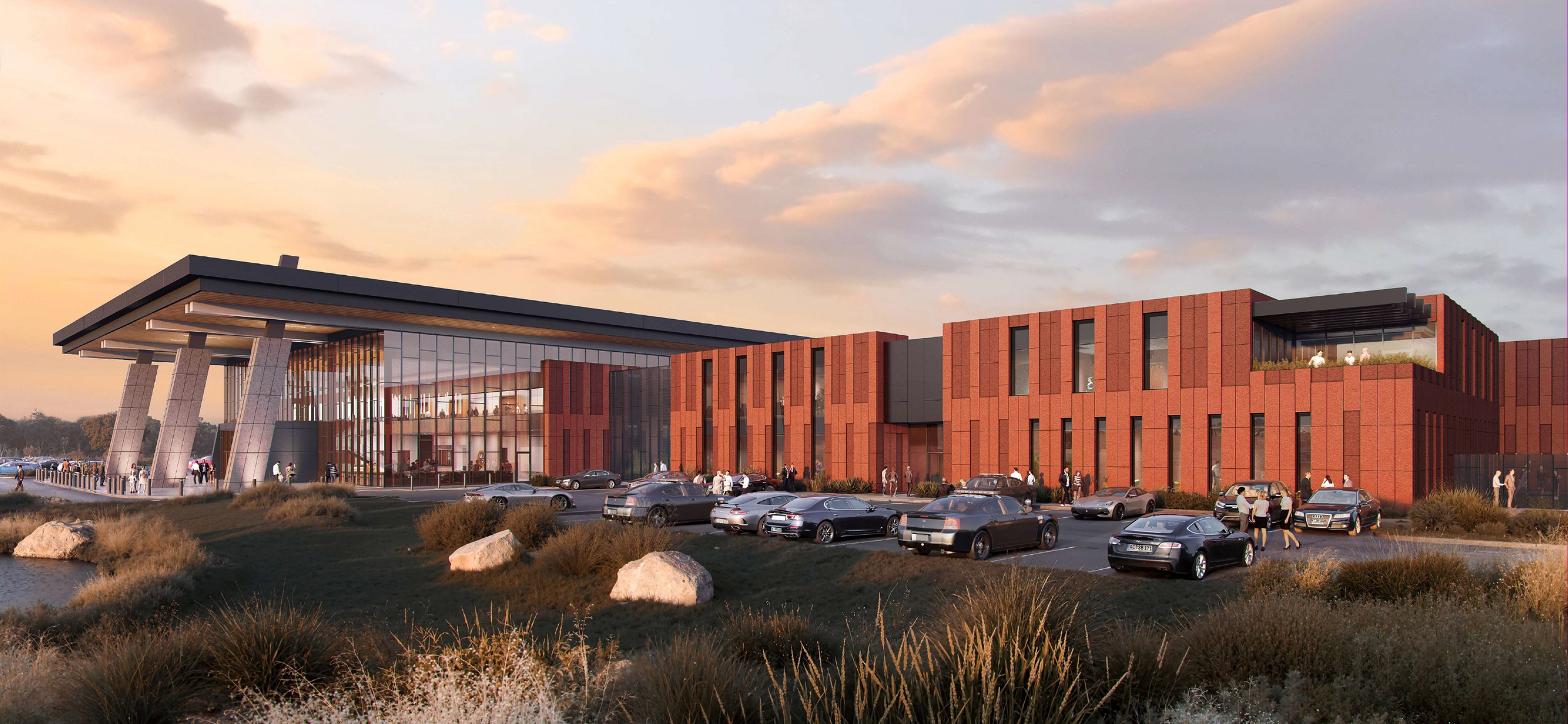
Frequently Asked Questions
-
Oklahoma County has examined several different approaches to finance the construction and operation of a new detention center. Ultimately, a vote of the people for a sales tax is the only feasible option. This would generate enough revenue not only to construct the facility but also cover maintenance and operations for the next 25 years. The advantage of a sales tax is that 30%-40% the revenue comes from non-residents.
Oklahoma County citizens will be voting on November 3, 2026, on a four-tenths of one percent (0.40%) sales tax, for 25 years, to operate, maintain, construct, renovate, finance, equip and pay staff of Oklahoma County detention, diversion and mental health facilities and programs.
The tax will raise an estimated $70 million annually to allow the county to move ahead to complete a new Oklahoma County Detention Center. Of the $70 million, about $44 million would go to debt service, leaving $26 million for operations including diversion and mental health services.
Work is already under way on portions of the detention center using a $260 million bond package approved by Oklahoma County voters in 2022.
In addition, the new Behavioral Care Center, which is scheduled to open in April of 2027, is located adjacent to the detention center. It was funded in full by more than $40 million from the American Rescue Plan Act.
When completed, the Oklahoma County Detention Center will give Oklahoma County vastly updated facilities using the latest in correctional design and best practices. The facility will be more functional, secure and better equipped to serve and support detainees, staff, visitors and the community.
-
There is no argument that Oklahoma County needs a more secure, efficient, functional and updated detention center. The current 13-story facility is 35 years old. Most jails last 25 years – few last 35 years. Since opening in 1991, it has been plagued with a variety of issues ranging from poor design and lack of appropriate space for medical, counseling, recreation, visitation and other service needs. Additionally, it was built using inferior construction methods and materials.
An analysis completed in 2026 by the McDaniel Consulting Group concluded that “the majority of the operational strain at Oklahoma County Detention Center is structural rather than behavioral.”
Oklahoma County has made several physical updates to the facility to lengthen its lifespan and better serve its growing community, but its many shortcomings continue to have a negative impact on the safety and well-being of detainees and staff.
In 2007-08, the U.S. Department of Justice Civil Rights Division issued its findings following an investigation of the Oklahoma County Detention Center. As a result, Oklahoma County and the Justice Department entered a Memorandum of Understanding to address the DOJ’s concerns. Over the years, the county has worked to address most of those issues, the major exception being the facility itself.
Over the past 15-plus years, many different groups were formed by Oklahoma County to study and make recommendations related to the construction of a new jail. The consensus of those groups was to build a new facility on a greenfield site.
A new jail at a new location was unanimously recommended by the Oklahoma County Criminal Justice Advisory Council (CJAC), a diverse group of business and community leaders, law enforcement, nonprofit service providers, attorneys, and judges seeking meaningful, long-term reform.
CJAC members at the time of the recommendation included Clay Bennett, Chairman of the OKC Thunder and Founding Chairman of CJAC; Tony Tyler, Tyler Media; Sue Ann Arnall, Arnall Family Foundation; Kevin Calvey, Oklahoma County Commissioner; Craig Freeman, OKC City Manager; David Prater, Oklahoma County District Attorney; Greater Oklahoma City Chamber and others).
In December 2024, Oklahoma County finalized the selection of its current site for the new detention center.
-
Oklahoma County voters recognized the need for a new jail facility and approved a $260 million bond package in June of 2022 for fewer beds than what are needed today. That was a critical first step, but four years later more funds are needed to build an adequately sized facility.
Since 2022, labor costs have risen 3.2% year-over-year. Steel, concrete, and other construction materials have risen 18% year-over-year. Electrical work has risen $40-$60 per square foot, just to name a few.
To complete a new detention center, the county now needs an additional $605 million.
-
Oklahoma County Commissioners voted 2-1 on August 27, 2025, to sell $215 million in remaining bonds to begin a phased build-out of the Oklahoma County Detention Center, which will include a new intake center, kitchen, laundry, minimum security detainee housing and other services.
Using current funds to begin the new Oklahoma County Detention Center helps to avoid future construction cost increases and allows the County to take advantage of a favorable bond market. The longer the County waits to build any part of the new detention center, the more it’s going to cost.
-
It will be a phased approach. The adjacent Behavioral Care Center (Phase 1) will be completed by December of 2026. The Oklahoma County Detention Center intake area, kitchen, laundry, minimum security beds, and central utility plant (Phase 2) should be completed by late 2028. If county voters approve the proposed sales tax in November 2026, work will begin on medium and maximum-security housing, medical, community organizations, investigations, courtrooms, transport, and more at the Detention Center (Phase 3). Phase 3 will take approximately two years.
-
Oklahoma law mandates that every county, by authority of the Board of County Commissioners and at the expense of the county, shall have a jail or access to a jail in another county for the safekeeping of prisoners lawfully committed and may contract or designate others to operate jail facilities on behalf of the county. 57 O.S. §41-47
Making arrests, securing convictions, implementing sentencing policies, jail operations, court deliberations and other duties are NOT the responsibilities of the County’s Commissioners, but the responsibilities of others.
-
There are many. Rather than a non-functional and much harder to secure high rise, the new facility will be built horizontally. This design eliminates the need to use elevators to move detainees back and forth within the facility or to and from court, which is a major problem and expense in the current facility.
The new facility will utilize a pod concept that improves security, supervision and interaction by creating better sight lines into housing and common areas to help control manpower requirements and daily operational costs.
Additionally, the new Detention Center will have enhanced sound control and provide the required amount of natural lighting in the building, which benefits detainees, staff and visitors. Natural lighting creates a more humane environment.
The new facility will offer major improvements in medical and mental health services. A modern infirmary will provide dialysis services, dental services, exams, x-rays and more. The Detention Center and adjacent Behavioral Care Center will include 388 mental health housing and treatment beds offering a broad scope of support from trained mental health officers and detention officers.
The new Detention Center, along with planned operational efficiencies of a new facility, will produce better conditions for those living and working in the facility.
(For a detailed list of improvements, go to the “Details” section.)
-
The new facility will be better equipped to serve and support detainees. With the involvement of a wide array of community organizations, the center will provide programming and classes to help detainees further their education or work on improving life skills.
The new facility will feature inmate service areas for family reunification, religious services and classrooms. The facility is designed and intended to provide a modern infirmary with dialysis services, dental services, exams, x-rays and more. Detainees will have access to an outdoor area for exercise and recreation.
The new facility provides space for at least two adjacent courtrooms where judges and court staff can handle routine matters on-site instead of at the courthouse downtown. The space is expandable to eight criminal courtrooms attached to the jail eliminating the transporting of inmates.
Various community organizations can utilize space in the facility to serve detainees. Those may include: Northcare, Department of Mental Health, The Education and Employment Ministry (TEEM), Restoration Center, Diversion HUB, HOPE, the County, Homeless Alliance and Red Rock.
-
The County will provide a new Diversion Center (Behavioral Care Center – BCC) that will include a significant number of dedicated mental health housing and treatment beds that offer a broad scope of mental health support.
The Behavioral Care Center has 60 beds for individuals who are not booked into the jail and will be evaluated by mental health professionals in a therapeutic environment. No detention officers will work within in the Behavioral Care Center.
Within the Detention Center there will be three levels of mental health housing units. Based on the current design, there will be 50 beds of crisis housing for those detainees with acute mental illness. There will also be 84 beds in a step-down housing unit, and another 224 beds in a different step-down unit for detainees that need to continue with their medication and see counselors as needed.
-
A pod concept is possible in a horizontal-design facility. It improves security, supervision, inmate services and interaction. The current design calls for four two-level pods / housing units, each designed with access points for food and medication deliveries.
Due to enhanced design features that will maximize sight lines and supervision, it is anticipated that there will be a significant cost savings of more than $9 million a year in operational costs.
Unlike the current structure where outdoor space is limited, each pod will have access to outdoor recreational space. Each pod will also include a multipurpose room with a detainee services kiosk, tables and chairs, an open interior dayroom lit with natural light, and kitchen support services area that includes a water fountain, microwave oven and washer/dryer. This type of design and supervision will allow detainees to be out of their cells for longer periods of time.
Each pod will feature a glass wall fronting a secure, outdoor recreational area shared with an adjacent unit.
The pods are designed so water, sewer, electricity, heating, cooling and other services to each cell are delivered through corridors outside the controlled space, eliminating the need for maintenance and repair workers to enter the inmate area to do their work.
-
More than 20 different sites were thoroughly evaluated by a Citizen’s Advisory Board.
Oklahoma County solicited through an RFP (Request for Proposal) and had 30 respondents. 15 of those sites were carefully evaluated and scored. The selected site offers numerous advantages: 1) ideal size and topography, 2) the current on-site availability of utilities including water, sewer, electrical and natural gas services, 3) accessibility to nearby roads. With approximately 71 acres, the 1901 E Grand location offers excellent space for current plans and any future expansion.
The location also offered space for the adjacent Behavioral Health Center for medical and psychological screening.
-
Delays due to zoning litigation that ended in December 2021 significantly contributed to the overall costs. In addition to inflationary factors, the cost of construction and materials has risen more than 30% since 2022.
-
The footprint of the current high-rise jail was not large enough to accommodate a modern, safer and more functional horizontal facility. Plus, there would be the logistical dilemma of continuing the operation of the detention center during the demolition of the current jail and construction of the new facility.
HOK and other outside experts determined it was more cost effective to abandon the downtown site and build on a new site. Land and construction costs are significantly higher in the downtown corridor, which would only increase the current budget deficit. HOK had determined the cost would have been a minimum of $150 million more than locations out of downtown. Also, a new jail at a new location was unanimously recommended by the Oklahoma County Criminal Justice Advisory Council (CJAC).
In addition, the statutory requirement to be 1,000 feet from a school could not be met in much of the downtown area. Moving into west downtown to meet the school statute would have required eminent domain.
Further, there is a misconception that community services that support the current jail are located nearby. That is not the case. The new facility will allow dramatically improved access to community services from booking to release from within the detention center.
Finally, had we built downtown critical adjacent roads would have to be shut down.
-
HOK is the national leader in master planning and designing both detention center and behavioral care center diversion facilities. HOK has been selected for, planned, and designed 17 of the 21 largest facilities in the nation over the past 10 years.
These include facilities in Nashville, Indianapolis, San Mateo, Calif., Wichita Falls, Texas, Pueblo, Colo., and many more. HOK approaches its Detention Center and Diversion projects with the goal of improving mental health outcomes to help decriminalize mental health, reduce recidivism, reduce jail populations, and improve efficiencies and work environments that save taxpayers and counties significant amounts of money.
HOK's Justice Division also plans and designs prisons, courthouses, police stations and similar projects.
HOK is teaming with Oklahoma City architectural firm Rees on the project.
-
Of the three most recent facilities built in Pennsylvania, Ohio and Kansas, the per bed cost of the Oklahoma County Detention Center is projected to be 20% less expensive on average.
-
Flintco is the construction contractor for the project. Headquartered in Tulsa, with offices in Oklahoma City, Flintco provides innovative construction solutions across the United States. In addition, they were selected under a qualification-based format not the low bidding quotes in part that they have previous experience in building detention centers.
-
The cost of maintenance and operations is expected to be more than $66 million annually.
-
A dedicated release center will include representatives of nonprofits who can connect released individuals with services they typically might need, such as housing, employment, counseling, life skills, and medical care. While most detainees are transported by relatives and friends, they could be transported by local partners. These services are above and beyond what we are currently offering at the existing facility.
-
To respect the constitutional rights of all pre-trial detainees, upon an order of release from the court or the posting of bond, detainees will be released as soon as all necessary paperwork and out-processing is completed.
-
Studies have shown that the crime rate in communities near a detention center have either modestly dropped due to increased presence of law enforcement, or they have had a near zero impact. In Oklahoma City, the area around the current facility has seen an influx of residential and business development during the past 30 years.
-
You should expect traffic to slightly increase around the facility due to staff commutes, service deliveries, inmate transportation, law enforcement/emergency services, and visitors.
-
A new Detention Center will create jobs for security, administrative, maintenance and medical staff, as well as generate local sales tax revenue and increased business for local retailers. Based upon what’s occurred around the current facility, we expect the area around the new facility will attract similar mixed-use development.
-
The horizontal design and the increased footprint for the detention center and adjacent Behavioral Care Center will make the new facility safer, more functional and better equipped to serve detainees. The improvements include:
o pod concept that improves security, supervision and interaction
o dramatically improved sight lines into housing and common areas
o enhanced sound controls and a maximum amount of natural lighting into the building; creating a more humane environment
o better solutions for treatment and diversion, which will address overcrowding
o elimination of the need to use elevators to move detainees
o programming and classes to help detainees further their education or work on improving life skills
o family reunification rooms, religious services and classrooms in inmate services areas
o dedicated booking area with seating for cooperative arrestees and holding cells for those who are not
o modern infirmary with dialysis services, dental services, exams, x-rays and more
o outdoor area for exercise and recreation
o a magistrate judge and courtroom will be connected to the intake, booking and holding area, allowing numerous cases to be adjudicated promptly for swifter justice for many detainees
o various community organizations can utilize space in the facility to serve detainees
o intake/assessment center to separate arrestees who need to enter the adjacent Behavioral Care Center rather than be booked into jail
o Behavioral Care Center will provide professional mental health care and recommend next steps
-
Unlike the current site, which utilizes elevators, the new facility design contains no elevators and allows for improved line-of-sight, creating a safer environment for both staff and detainees.
The new detention center will improve employee safety and morale. It will include a staff services space with training rooms, lockers, armory, administrative offices, secure parking, a workout space and open patio for employee meals and breaks.
The Behavioral Care Center has 60 beds for individuals who are not booked into the jail and will be evaluated by mental health professionals. There are no detention officers in the center.
-
There are many. First and foremost, it has been proven that such facilities improve lives and allow for a more successful life upon release.
The Behavioral Care Center staff will conduct medical and psychological assessment screening to identify individuals who may qualify for treatment at the Behavioral Care Center rather than jail incarceration. Through coordination with the District Attorney’s office, qualifying individuals will be given treatment program options that, if successfully completed, will likely allow for the dismissal or suspension of criminal charges.
The Behavioral Care Center reduces the need and demand for additional detention beds.
Individuals admitted to the Behavioral Care Center will not be booked into the detention center and their charges are suspended until released.
-
The facility is funded in full by more than $40 million from the American Rescue Plan Act.
-
No. The Behavioral Care Center will be located adjacent to the Oklahoma County Detention Center in a separate building and house non-incarcerated individuals with mental health needs.
-
Oklahoma County Commissioners selected Tulsa-based non-profit CREOKS Health Services to operate the Behavioral Care Center. CREOKS has more than 45 years of experience providing integrated health, wellness and social services that strengthen individuals, families and communities.
By partnering with a long-time expert in behavioral health to develop and operate the Behavioral Care Center, Oklahoma County believes it can reduce crisis encounters, strengthen public safety and offer real pathways to recovery.